Thirty Seconds in the Cold: Hormesis, Resilience, and the Design of Growth
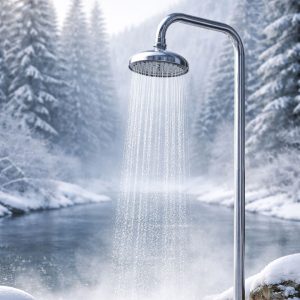 This morning, I lasted just thirty seconds in my cold contrast shower. If you know Buffalo, you know the cold here isn’t subtle. By January, it’s not novel, it’s elemental. The water doesn’t tingle. It demands. Today, I didn’t fight it. I didn’t try to conquer. I just stayed, with breath, with resistance, for thirty slow seconds.
Then something shifted. The panic didn’t escalate. My body didn’t break. It adapted. And I stepped into warmth, not as a reward, but as part of the design. This, I remembered, is hormesis: the biological principle that low, intermittent, recoverable stress strengthens living systems.
The Sweet Spot of Growth
Hormesis teaches that some stress—if well-dosed and followed by recovery—signals the body to repair, fortify, and evolve. Exercise follows this pattern: muscles tear and rebuild stronger. Bones densify under load. Without challenge, systems atrophy. With too much, they break. But in the middle? Growth.
Cold exposure triggers norepinephrine and dopamine, sharpens attention, and trains adaptability. Heat does the same—activating protective proteins and cardiovascular resilience. But benefits only emerge in the middle zone, and only when stress is followed by rest.
The Nervous System Needs Challenge Too
The nervous system learns through contrast—activation and recovery, effort and integration. Brief stress teaches the brain: I can activate, and I can come back. This strengthens what neuroscience calls prefrontal-limbic connectivity—the brain’s capacity to stay present under pressure.
In Chassidic language, this is moach shalit al halev—the mind guiding the heart, not suppressing it. Not all discomfort is danger. Some is just the stretch of growing capacity.
Torah Has Known This All Along
Judaism never promised ease. It promised growth.L’fum tza’ara agra—“according to the effort is the reward.” Not moral reward, but structural. The vessel stretches and can hold more light.
The Zohar says it differently: Yisron ha’or min ha’choshech—light’s superiority arises from darkness. The Lubavitcher Rebbe taught that oil, the symbol of illumination, only emerges when the olive is pressed. Not crushed. Pressed. Pressure that transforms, not destroys. Olives yield. Glass shatters.
Psychological Resilience and Spiritual Ascent
Resilience doesn’t come from comfort. It comes from metabolized adversity. A nervous system never stretched becomes fragile. One stretched too far becomes traumatized. But in the hormetic zone—moderate, meaningful challenge followed by safety—growth emerges.
This is why post-traumatic growth exists but isn’t guaranteed. It depends on support, integration, and meaning. As Torah says: a broken heart becomes a vessel. Not shattered—broken open.
Buffalo Is a Living Laboratory
In Buffalo, you don’t conquer winter. You negotiate. You layer. You go out anyway. You come back in. Exposure, then refuge.
Cold contrast showers are just winter distilled. And growth, like that cold, doesn’t have to last long to reshape the system.
A Hormetic Menu (Small Doses)
- Take winter walks
- End your shower cold—just 30 seconds
- Shovel snow without resentment
- Let hunger visit
- Read something that challenges your worldview
- Stay in a hard conversation a little longer
- Take on a mitzvah that stretches consistency
- Let longing or effort arise without numbing them
- And then: rest. Without recovery, stress isn’t hormesis. It’s harm with a nicer name.
Why Those Thirty Seconds Mattered
That cold water wasn’t about toughness. It was about trust—that stress, wisely chosen and followed by warmth, builds strength. Resilience is not forged in sameness. It is born in contrast. We’re not here to be comfortable. We’re here to become capable. And sometimes, that becoming looks like thirty seconds in the cold.
LISTEN AND ENJOY My Hormesis Song! “Hormesis My Helper”
Read a more in-depth article on SUBSTACK HERE
We love hearing from you, please feel free to leave your comments below.
With Gratitude,
Rus Devorah
Selected References
Buijze, G. A., et al. (2016). The effect of cold showering on health and work: A randomized controlled trial. PLoS ONE, 11(9), e0161749.
Calabrese, E. J., & Mattson, M. P. (2017). How does hormesis impact biology, toxicology, and medicine? NPJ Aging and Mechanisms of Disease, 3, 13.
McEwen, B. S. (2017). Neurobiological and systemic effects of chronic stress. Chronic Stress, 1, 1–11.
Schneerson, M. M. (1990). Sefer HaMa’amarim: Purim Katan. Kehot Publication Society.
Zohar. (n.d.). The Zohar. Standard classical edition.