LETTING GO TO LET IT GROW: Torah, Neuroscience, and the Quiet Power of Not Cornering the Soul
 This semester, I’ve been teaching Advanced Clinical Practice at Touro University. The course begins in an unusual way: the entire first quarter, what I call the “quadrester,” focuses not on techniques or interventions, but on one essential element: the therapeutic relationship.
Before the modalities and methods, we return to a bedrock truth: relationship is the intervention. When a client feels safe, truly seen, and unconditionally regarded—sometimes for the first time in their lives—an invisible shift begins. The therapist may feel like she’s a passive element, like a mirror or “just as a witness.” But for the client, that relational safety becomes the quiet catalyst for transformation. This isn’t a therapeutic gimmick, it’s a worldview. Safety creates change. Pressure squelches it. And this truth spans far beyond therapy—into parenting, education, marriage, leadership, and spiritual growth.
Torah’s Ancient Neuroscience: Don’t Corner a Human Being
In Hilchos Melachim, Maimonides teaches that when Israel’s army surrounds an enemy city, one side must be left open. The Torah forbids full entrapment, encirclement. Why? Because a cornered human being doesn’t surrender, he panics. With no escape route, the brain floods with stress hormones. The person becomes irrational, unpredictable, and more dangerous than with the ability to leave or surrender.
This Is Ancient Trauma Wisdom
Long before MRI machines or trauma research, Torah understood: people don’t heal when trapped—they dysregulate.
- A cornered soldier fights desperately.
- A cornered child rebels or melts down.
- A cornered spouse shuts down.
- A cornered client resists.
- A cornered soul hides.
Safety Is Not A Luxury; It Is The Precondition For Human Functioning – Neuroscience Confirms It
Neuroscience now explains this through the polyvagal theory. When a person feels emotionally or physically unsafe, the sympathetic nervous system takes over: heart races, breath shortens, the thinking brain (prefrontal cortex) goes offline. In this state—fight, flight, freeze, flop, or fawn—growth becomes neurologically impossible. But when the body senses safety, a different system takes over. Breath deepens. Muscles soften. The prefrontal cortex re-engages. Imagination, empathy, and reflection return. The Torah’s timeless message: Never corner a person. Always leave an opening. Make space. Allow breath.
From Carl Rogers to Chassidus: The Soul Needs Space
Carl Rogers built his therapeutic philosophy around the same idea: unconditional positive regard enables the client’s inner self to move naturally toward wholeness.
Chassidus echoes this deeply: the neshama, when not coerced, gravitates toward truth. Truth is its native habitat. Like Rogers’ client, the soul thrives when not shamed or pressured.
Attachment theory supports this too:
- Safety breeds curiosity.
- Predictability builds courage.
- Attunement fosters growth.
“Chanoch l’no’ar al pi darko”—educate each child according to his/her own unique way. Not through pressure, but through presence and deep regard.
Tzimtzum: G‑d’s Trauma-Informed Model
Somatic psychology affirms this in the body: healing happens when the body feels safe. “The body knows first.” This mirrors the mystical concept of tzimtzum—G‑d “steps back” to make space for human agency. Divine contraction is not distance—it’s love. The Lubavitcher Rebbe emphasized: true educators don’t overwhelm. They make space for the student’s inner light to emerge.
Letting Go is a Sacred Act
“Let go and let G‑d” is more than a slogan—it’s neurological wisdom. Acceptance is not giving up. It’s the oxygen of change. Carl Rogers put it this way: “The curious paradox is that when I accept myself just as I am, then I can change.” Similarly, Tanya teaches: mo’ach shalit al halev—the mind gently guiding the heart, not coercing it. This is soft, sacred redirection—clinical attunement in the language of the soul.
Let It Grow
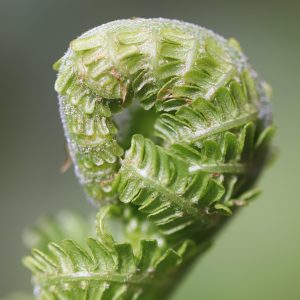
Letting go—whether as therapist, parent, educator, or spouse—is not weakness. It is the strength to trust natural growth. We grow not when pushed, but when permitted. We change not under pressure, but in presence. When the soul is no longer cornered, it turns toward the light. And something miraculous happens:
It grows.
We love hearing from you, please feel free to leave your comments below.
With Gratitude,
Rus Devorah
References
Frankl, V. Man’s Search for Meaning.
Kabat‑Zinn, J. Full Catastrophe Living.
Levine, P. In an Unspoken Voice.
Porges, S. The Polyvagal Theory.
Rogers, C. On Becoming a Person.
van der Kolk, B. The Body Keeps the Score.
Maimonides, Mishneh Torah: Hilchos Melachim.
Tanya, Ch. 12; Pirkei Avot; Likkutei Sichos.